
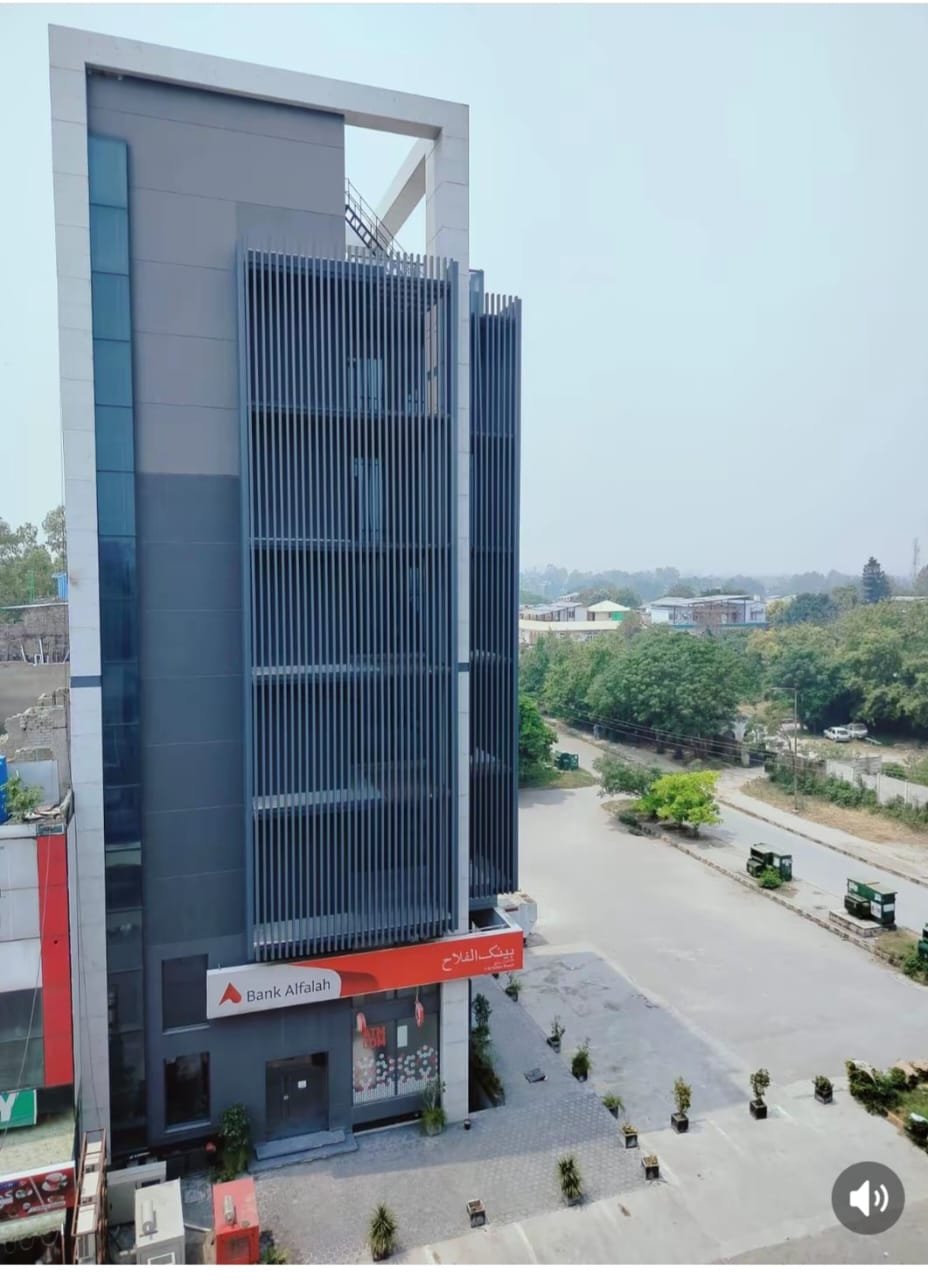
What Property Buyers Look For in Pakistan in 2026
For buyers in Pakistan, especially Islamabad, Karachi and Lahore, the decision is no longer just about finding a property at a certain price. The documented market evidence shows buyers are increasingly evaluating the full ownership equation: affordability, location, financing, legal status, infrastructure, recurring costs and the ability to live in or resell the property.
1. What buyers are actually looking for
Security and developed communities
Current buyer research shows strong interest in secure, planned communities with functioning infrastructure, commercial facilities and accessibility. In Lahore, buyers are increasingly looking at gated communities and apartments; in Islamabad, developed and secure areas with highway and commercial connectivity are prominent; in Karachi, secure and established communities are particularly important. (Zameen)
This means buyers increasingly distinguish between:
- developed versus undeveloped property
- possession versus non-possession
- functioning utilities versus promised utilities
- established neighbourhood versus new launch
- genuine end-user demand versus purely investor demand
This is particularly important for plots and files.
Ready-to-move property
There is a practical reason for the growing interest in completed homes and apartments. A buyer can immediately inspect the construction, utilities, surroundings, access roads and neighbouring development instead of relying entirely on a developer’s future promises.
For a family buyer, the question is often less “How much can this property appreciate?” and more “Can my family actually live here comfortably?”
Schools, hospitals and daily convenience
Families generally want access to schools, hospitals, markets, workplaces, parks and transport rather than simply a prestigious society name.
This creates a measurable location premium. A cheaper property can become expensive in practical terms if daily commuting takes significantly longer or essential facilities are far away.
2. Affordability
The purchase price is not the affordability calculation
A buyer who has Rs 3 crore available does not necessarily have a Rs 3 crore property budget.
The actual budget should account for:
Purchase price
- taxes and transfer charges
- legal/documentation costs
- renovation or construction
- furnishing
- utility connections
- society charges
- emergency reserve
For a financed purchase, the calculation also includes the monthly proerty installment and the buyer’s other obligations.
Islamabad, Karachi and Lahore
Affordability differs substantially between the three markets.
Current house-price index data show the average house asking level around Rs 8.54 crore in Islamabad, Rs 9.11 crore in Karachi and Rs 5.07 crore in Lahore in the latest July 2026 index available. However, these are city averages and conceal very large differences between neighbourhoods and property sizes. For example, the same Islamabad index shows B-17 around Rs4.27 crore while F-7 is above Rs46 crore. Karachi ranges from much lower-priced peripheral locations to more than Rs23 crore in DHA, while Lahore’s DHA average is around Rs9.19 crore. (Zameen)
Therefore, affordability should always be analysed at:
City → area → property type → size → condition
rather than simply comparing “Islamabad property” with “Lahore property.”
3. Financing
Mortgage finance remains relatively limited
Pakistan’s formal mortgage market remains small. A parliamentary committee was informed in May 2026 that mortgage financing accounted for only around 0.3% of GDP and 0.56% of private-sector credit. This helps explain why Pakistani buyers still rely heavily on savings, family capital, instalments and informal financing rather than conventional mortgages. (National Assembly of Pakistan)
Current government-backed housing finance
The revised affordable-housing programme increased the maximum housing unit size to a house of up to 10 marla/2,720 sq ft or a flat of up to 1,500 sq ft, with financing of up to Rs10 million at a fixed customer rate of 5%.
A further April 2026 revision allows total monthly amortisation payments, including existing consumer-finance obligations, to reach up to 65% of the applicant’s net disposable income under the programme. Banks are also required to complete credit approval within 15 working days after receiving a complete application. (State Bank of Pakistan)
The 65% figure should not be interpreted as “a household can comfortably spend 65% of its income on housing.” It is a financing eligibility rule. A buyer should separately consider food, education, healthcare, transport, utilities, family obligations and emergency savings.
Interest rates still matter
As of 14 September 2026, the SBP policy rate is 11.5%, while the 12-month KIBOR was around 12% in late September.
Therefore, buyers considering ordinary commercial mortgage products need to examine whether the property’s financing cost is sustainable rather than comparing only the advertised installment.
What banks themselves force buyers to consider
The financing process also acts as a form of due diligence. Banks require ownership and title documentation and property assessment before disbursement. For low-cost housing, financing can reach up to 90% of value under applicable rules, while banks may use approved valuers for higher-value properties. (State Bank of Pakistan)
This is significant because a property that cannot satisfy basic bank documentation and valuation requirements deserves much closer scrutiny, even when the buyer is paying cash.
4. Ownership costs
The buyer’s cost is higher than the advertised price
Property buyers need to budget for three broad categories.
Transaction costs
These can include:
- Federal advance tax
- Stamp duty
- Registration fee
- CVT where applicable
- Mutation/transfer fees
- Society transfer charges
- Development or authority charges
- Legal/documentation expenses
- Agent commission where applicable
For tax year 2026–27, the federal advance tax on property purchase under Section 236K is 1.25% for an Active Taxpayer List buyer. Non-ATL buyers face substantially higher rates based on property value. (FBR)
For example, on a Rs5 crore transaction, 1.25% alone represents Rs625,000 before other transaction costs.
The important point is that 236K is only one component. Provincial and local charges vary by jurisdiction, property type and transaction.
Islamabad
The buyer needs to consider federal taxes plus ICT registration/deed-related charges, society transfer fees where applicable, and ongoing property-related charges.
The ICT administration’s deed-registration process requires the original land-ownership proof and the CNICs of the seller, purchaser and witnesses. (ICT Administration)
Lahore
Punjab has additional stamp, registration, mutation and local-government charges, depending on the transaction. The provincial e-stamping system is designed to calculate and collect several property-related charges through the official process. (IOTA Punjab)
Lahore buyers also need to pay particular attention to the new digital property-record framework.
Karachi
Karachi buyers have to consider the relevant authority and land-record system because the city has several different administrative and development jurisdictions.
The Sindh Board of Revenue’s digital system provides access to property registers, sale certificates, registries, maps and other land-record services, although it explicitly says online information is for public information and official certified documents should be obtained from the relevant Revenue Service Center. (Sindh Zameen)
5. Due diligence
This is arguably the most important part of the buyer angle.
Step 1: Verify the seller
Check:
CNIC
Ownership record
Authority/society record
Title documents
Power of attorney, if applicable
Inheritance documentation, if applicable
Any co-owner’s rights
The name on the seller’s identity document should correspond with the official ownership record.
Step 2: Verify the property itself
Confirm:
Plot number
Block/sector
Area
Property type
Boundary/location
Possession status
Outstanding dues
Mortgage/charge
Court dispute
Utility status
Development status
Do not rely solely on an allotment letter, dealer’s file or photocopied documentation.
Step 3: Verify the housing scheme
This is particularly important in Islamabad.
CDA states that private housing schemes require approval of the Layout Plan followed by the required NOC before sponsors can undertake development and sale of plots. It also maintains a public list of illegal housing schemes.
In May 2026, CDA took action against illegal housing schemes in Zone IV, including sealing their offices over unlawful sale and purchase of plots. (Capital Development Authority)
So an Islamabad buyer should verify:
LOP approval → NOC → approved area/boundary → specific plot → ownership
Having a society’s name on an advertisement is not proof that the particular property is legally saleable.
Lahore’s new documentation environment
LDA currently displays a public notice requiring a Property Certificate for housing-scheme transactions from 1 July 2026. The broader system is intended to connect housing-society records with Punjab’s digital land-record infrastructure. (Lahore Development Authority)
For a Lahore buyer, this makes record verification particularly important:
Approved scheme → property record → seller → specific property → transfer documentation
A buyer should not treat an old property file as sufficient evidence of ownership without checking the current official record.
Karachi requires authority-specific verification
Karachi presents a more complicated due-diligence environment because ownership and development records can fall under different institutions depending on the location.
The buyer should first identify the property’s jurisdiction and then verify the relevant title, lease/transfer status, approved building or development documentation, outstanding dues and land record.
The Sindh digital land-record system provides searchable property registers and registry information, but it itself warns that online records should not replace certified documents. (Sindh Zameen)
6. What buyers should check before paying a token
The practical buyer checklist
A serious buyer should be able to answer these questions:
Legal
Is the seller the actual legal owner?
Is the title clear?
Are there co-owners?
Is there a mortgage, lien, dispute or stay order?
Is the property legally transferable?
Development
Is the housing scheme approved?
Does the approval cover this specific block?
Does the property have possession?
Are roads, water, electricity, sewerage and gas actually available?
Financial
What is the complete purchase cost?
What taxes and transfer charges apply?
Are there outstanding society or utility dues?
What will the monthly ownership cost be?
Physical
Is the property actually the stated size?
Is the construction structurally sound?
Is there waterlogging, drainage or access difficulty?
What is the surrounding occupancy?
What are the neighbouring properties being used for?
Future
How easy will it be to rent?
Who is likely to buy it from you later?
Are major infrastructure projects actually approved and funded?
Could future development create traffic, congestion or environmental problems?
7. What changes between Islamabad, Karachi and Lahore?
| Buyer concern | Islamabad | Karachi | Lahore |
|---|---|---|---|
| Main buyer priority | Security, planning, connectivity | Security, infrastructure, accessibility | Gated living, connectivity, amenities |
| Major affordability issue | High prices in established sectors | Huge price spread between areas | Wider range of housing options |
| Financing | Limited conventional mortgage penetration | Financing plus strong apartment market | Financing plus significant housing-society market |
| Main due-diligence issue | CDA approval/NOC and illegal schemes | Multiple authorities and land records | Property records and scheme approval |
| Important ownership issue | Society/CDA transfer status | Lease/title/authority jurisdiction | Registry/property certificate/record |
| End-user concern | Schools, hospitals, commute, security | Water, security, roads, utilities | Traffic, schools, hospitals, connectivity |
| Speculative risk | Files and developing corridors | Peripheral files and disputed/developing areas | Pre-possession/file-based developments |
8. What the experts’ evidence tells us
The current buyer picture is moving toward a more practical purchase decision.
Buyers are looking for:
Affordability
Not merely the advertised property price, but the total amount required to acquire and maintain it.
Usability
A functioning home in an area people actually want to live in.
Financing feasibility
A monthly payment that works alongside existing household obligations.
Documentation
Clear, verifiable ownership and approvals.
Infrastructure
Actual roads, utilities, schools, hospitals and commercial access.
Security
Particularly important in gated and established communities.
Resale potential
A property with a genuine pool of future buyers is materially different from an asset whose only potential buyer is another speculator. Our current buyer research across the three cities shows strong interest in planned, secure and well-connected communities.
So, the biggest shift is therefore from:
“Can I buy this property?”
to:
“Can I afford to own it, is it legally secure, can I actually use it, and will there be a real market for it later?”
That is the core of the buyer angle for Pakistan’s property market in 2026.
1 Comment